
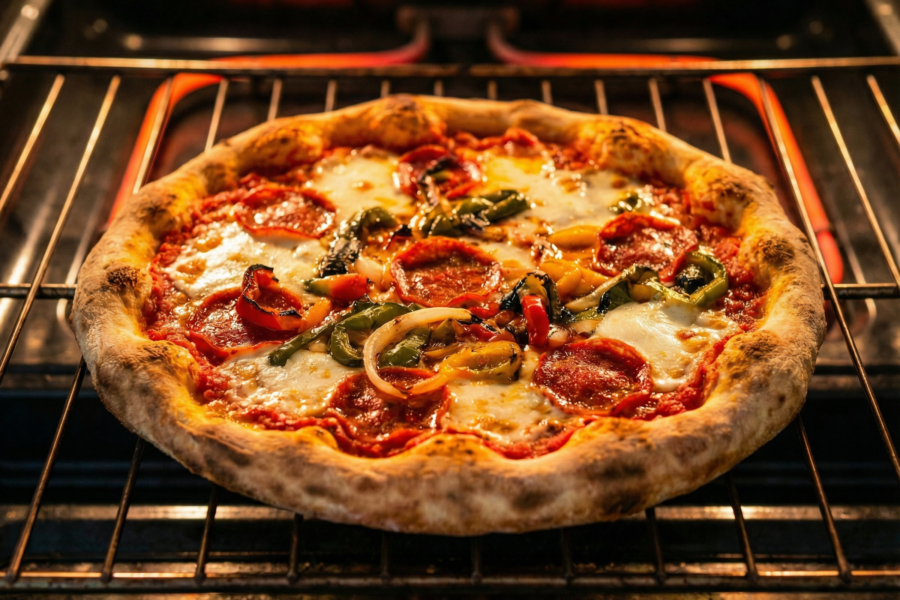
Can you put pizza in the oven without a tray? Yes — and for frozen pizza it is often the better choice. Do not use this method for fresh, raw pizza dough, which will sag and fall through the rack. The main risk is cheese dripping onto the oven floor — prevent this by placing a baking sheet or a sheet of foil on the rack below as a drip catcher.
You’re standing in your kitchen holding a frozen pizza. The box says to put it directly on the oven rack. It feels wrong. It feels like you’re about to create a disaster — melted cheese dripping onto the heating element, smoke filling the kitchen, a burnt mess that takes an hour to clean. So you put it on a baking sheet instead, like you always do.
And then you wonder why the crust is soft and pale.
This article is going to answer every question you actually have about cooking pizza without a tray: will it make a mess, will it damage your oven, which pizzas work and which ones don’t, and what the best method is for each situation. No fluff. Just answers.
Which Method is Right for Your Pizza? Start Here.
Before anything else, find your situation in this table and get your answer.
| Method | Best For | Crust Result | Mess Risk |
| Directly on Oven Rack | Frozen pizza, reheating slices | Crispy, slightly marked | Medium — use a drip catcher |
| Baking Sheet / Tray | Homemade pizza with raw dough | Softer, pale bottom | Very Low |
| Pizza Stone or Steel | Homemade artisan pizza | Very crispy, evenly browned | Low |
| Inverted Cast Iron Pan | Any pizza, especially homemade | Exceptional — rivals a pizza steel | Low |
| Cast Iron Pan (upright) | Deep dish / pan pizza | Deeply browned, fried-like bottom | Very Low |
The Mess Question: What Actually Happens if Cheese Drips?
This is the real reason people search for this topic. Let’s be direct about it.
If toppings or cheese slide off the pizza and land on the hot oven floor or a lower heating element, three things happen in quick succession: it burns, it smokes, and it becomes a carbonized, cement-like substance that is genuinely unpleasant to clean. The smell of burnt cheese in a hot oven is one of the more unpleasant kitchen experiences available to you.
The Fix: Use a Drip Catcher
Before you preheat your oven, place a baking sheet or cookie sheet on the rack directly below where the pizza will sit. This catches any drips without interfering with the hot air circulating around the pizza. A baking sheet is better than aluminum foil here — it’s reusable, more stable, and won’t crinkle and potentially tip a drip toward the oven floor. Do not place anything directly on the oven floor, as this can block airflow and interfere with the heating element.
With a drip catcher in place, the mess risk drops to nearly zero.
Frozen Pizza vs. Homemade Pizza: Two Completely Different Situations
This is the most important distinction in the entire article, and it’s where most mistakes happen.
Frozen Pizza: The Rack is the Right Choice
Frozen pizzas are specifically engineered for direct rack cooking. The crust is par-baked and flash-frozen into a rigid, structurally sound disc. It can support itself on the rack without sagging. More importantly, the direct contact with the hot rack and the unobstructed airflow underneath the crust are what allow it to crisp up properly as it bakes. A baking sheet traps moisture under the crust and slows down the heat transfer, resulting in a pale, soft bottom. For frozen pizza, the rack is not just acceptable — it’s the better method.
One critical rule: Only pull the frozen pizza from the freezer when your oven is fully preheated. A pizza that has been sitting on the counter for 15-20 minutes while the oven heats up has partially thawed. The center softens just enough to sag when it hits the hot rack, and toppings begin to slide. Pull it straight from the freezer to the rack without delay.
Homemade Pizza with Raw Dough: Never Use the Rack Alone
Fresh pizza dough is soft, wet, and pliable. The moment it contacts a hot oven rack, it will begin to droop between the grates. It will not hold its shape. For homemade pizza, you need a solid, preheated surface — a pizza stone, a pizza steel, or the inverted cast iron method described below.
Pro Tip: If you’re making homemade pizza dough, lightly brush your pizza stone or inverted pan with olive oil before launching the pizza. This prevents sticking and adds a subtle, fried-quality crispness to the bottom of the crust that is genuinely excellent.
What the Other Articles Won’t Tell You
The Inverted Cast Iron Method: Better Than a Pizza Stone
Here is the technique that almost no one writes about, and it’s the best thing in this article.
If you own a cast iron skillet, you already own a pizza cooking surface that rivals a dedicated pizza steel — you just haven’t been using it correctly. Instead of using the skillet as a pan, flip it upside down and place it on the center oven rack. Preheat your oven to its maximum temperature — 500°F to 550°F (260–290°C) — with the inverted skillet inside for a full hour.
Cast iron has exceptional heat retention. After an hour at maximum temperature, the flat bottom of that inverted skillet is storing an enormous amount of thermal energy. When you launch your pizza onto it, that stored heat blasts the crust from below, creating a deeply browned, crispy bottom in a fraction of the time a cold baking sheet would take.
This method works for any pizza — homemade, store-bought pre-made bases, or even a frozen pizza if you want the absolute best result. The slight dome of the inverted skillet also makes it easier to slide the pizza on and off cleanly. It’s a technique that costs you nothing if you already own the pan, and it produces results that will make you question why pizza stones exist.
The Partial Thaw Is the Real Enemy
The most common failure with the rack method isn’t using the wrong type of pizza. It’s using a frozen pizza that has been allowed to sit out too long. Even 15 minutes at room temperature can soften the center of a frozen pizza enough to cause it to sag on the rack. The rule is simple: preheated oven first, then pizza from the freezer. Not the other way around.
Will It Damage the Oven Rack?
No. An oven rack is designed to withstand the highest temperatures your oven can produce. A pizza is well within its weight limits. The only risk is to the oven floor if you skip the drip catcher and have to scrape off burnt cheese, which can scratch the enamel coating.
Does It Work in a Convection Oven?
Yes, and it works even better. A convection oven uses a fan to circulate hot air continuously, which accelerates moisture evaporation from the crust and promotes browning. If you’re using a convection setting, reduce the cooking time by 2-3 minutes and check for doneness slightly earlier than the package suggests.
How to Do It Right: A Simple Checklist
1.Place a baking sheet on the lower rack as a drip catcher before preheating.
2.Preheat the oven to the temperature on the packaging — typically 400–450°F (205–230°C) — and let it sit at that temperature for a full 10 minutes after it signals ready.
3.Pull the pizza directly from the freezer to the center rack. No counter time.
4.Check halfway through and rotate 180 degrees if one side is browning faster.
5.The pizza is done when the cheese is bubbly and golden brown and you can lift an edge without it flopping.
Frequently Asked Questions
Can I use parchment paper on the oven rack?
No. Parchment paper is not designed for direct contact with oven heating elements. At high temperatures it becomes brittle and can ignite. Use it only on a baking sheet.
How do I get the pizza off the rack without burning myself?
Use tongs to slide the pizza from the rack directly onto a cutting board. A wide spatula works well for the final transfer.
Does cooking on the rack make pizza cook faster?
Yes, typically by 2-3 minutes. The heat transfers directly to the crust without having to first heat up a cold pan. Check for doneness a few minutes before the earliest time on the box.
What about thin crust pizza?
Thin crust frozen pizzas work well on the rack. A very thin, crispy-style pizza (like a cracker crust) is actually the best candidate of all, as it has very little moisture to release and crisps up beautifully with direct heat.
The Big Naked Bacon Takeaway
The baking sheet is a habit, not a requirement. For frozen pizza, it’s actively working against you — trapping moisture and slowing down the crust. Ditch it, use a drip catcher on the lower rack, and pull the pizza straight from the freezer to the hot oven. And if you want to go further, flip your cast iron pan upside down and preheat it for an hour. That’s the move nobody talks about, and it’s the best pizza crust you’ll get from a home oven without spending $80 on a pizza steel.
Leave a Reply