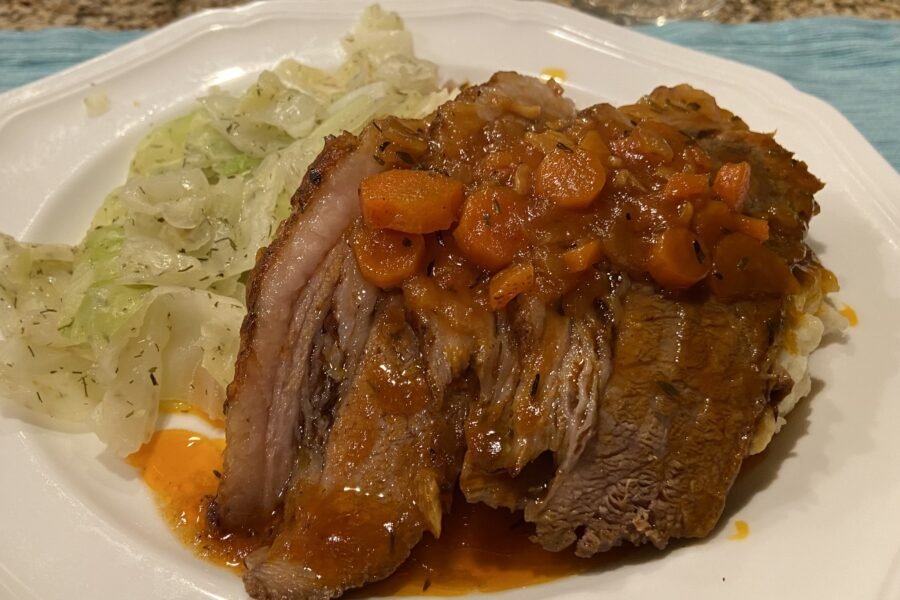
The main difference is fat content. Brisket is a fatty, flavorful cut that becomes tender and juicy when slow-cooked — ideal for a classic corned beef dinner. Round is a much leaner cut, best for slicing thin for deli-style sandwiches. Brisket is more forgiving to cook. Round is easier to overcook.
Corned Beef Round vs. Brisket: At a Glance
| Feature | Corned Beef Brisket | Corned Beef Round |
|---|---|---|
| Fat Content | High | Very Low |
| Texture | Tender, juicy, shreds easily | Firmer, slightly chewy |
| Best For | Classic corned beef dinner, pastrami | Deli-style sandwiches, slicing thin |
| Cooking Method | Slow & low — boil, slow cooker, Instant Pot | Slow & low, but less forgiving |
| Cost | Generally more expensive | Generally less expensive |
The Real History of Corned Beef
Corned beef is synonymous with Irish-American culture, but the corned beef we eat today has very little to do with Ireland. It is an American invention, born out of the immigrant experience in New York City in the late 19th century.
In Ireland, beef was a luxury. The Irish traditionally ate pork — specifically a cut known as Irish bacon. Cows were used for dairy, not meat. When Irish immigrants arrived in New York, they found that beef was far more affordable than it had been back home. They also found themselves living alongside Jewish immigrants, who had their own tradition of curing beef.
The cut most readily available in those immigrant neighborhoods was brisket — tough, undesirable, and cheap. Jewish butchers knew how to make it palatable: a long cure in a salt brine followed by a slow simmer for hours. The Irish adopted the method, and a new tradition was born. The corned beef and cabbage we eat on St. Patrick’s Day is not an Irish dish. It is an Irish-American dish, a product of the melting pot of New York City.
Where the Cuts Come From
Understanding the difference between brisket and round starts with knowing where on the cow they come from.
Brisket comes from the lower chest of the cow — a hard-working muscle that supports much of the animal’s weight. It is full of tough connective tissue and a significant amount of fat, both within the muscle and in a thick fat cap on top. When cooked low and slow for a long time, the connective tissue breaks down into gelatin and the fat renders, making the meat incredibly tender and flavorful.
Round comes from the rear leg of the cow. Also a hard-working muscle, but far leaner. It has very little intramuscular fat and almost no fat cap. Because it lacks that internal fat, it has a firmer, drier texture when cooked — the same cut often used for roast beef.
Fat Content: The Most Important Difference
Fat is flavor, and fat is forgiveness.
The high fat content of brisket bastes the meat from the inside as it cooks, keeping it moist and juicy even after hours of simmering. The resulting texture is fall-apart tender — you can shred it with a fork. This makes it the superior choice for a traditional corned beef and cabbage dinner, where the meat is the star of the show.
The lack of fat in a corned beef round means a much firmer, meatier texture. It is not as juicy or rich as brisket, and it can easily become dry and tough if overcooked. Its main advantage is that it holds together beautifully when sliced — making it the right choice for deli-style sandwiches where you want thin, uniform slices that do not fall apart.
What About Pastrami?
Pastrami is essentially corned beef with an extra layer of flavor. After the brining process, the meat is coated in a spice rub — typically black pepper and coriander — then smoked, then steamed until tender.
Brisket is the only choice for pastrami. The high fat content is essential to keep the meat from drying out during the long smoking and steaming process. A pastrami made from corned beef round would be unpleasantly dry and tough. If you are making pastrami at home, or ordering it from a good deli, you are eating brisket.
How to Cook Each Cut
Both cuts require low and slow cooking, but the specifics matter.
Brisket: Simmer gently in water or a flavorful broth for 3–4 hours. A slow cooker on low for 8–10 hours also works beautifully. The goal is to give the connective tissue plenty of time to break down. In a wet environment, it is almost impossible to overcook a corned beef brisket — it will simply get more tender.
Round: Also best simmered, but far less forgiving. Because of its low fat content, it can become dry if cooked too long. Check it for tenderness after 2–3 hours. It is done when a fork can be inserted easily, but it will not be fall-apart tender like brisket.
Nutritional Comparison
| Nutrient | Brisket (per 4 oz) | Round (per 4 oz) |
|---|---|---|
| Calories | ~285 | ~210 |
| Fat | 20g | 10g |
| Protein | 24g | 28g |
| Sodium | 950mg | 950mg |
The round is significantly lower in calories and fat, and slightly higher in protein. The sodium content is high in both due to the brining process.
Pro Tip: When you buy a corned beef brisket, it often comes with a spice packet. Throw it away and make your own pickling spice blend with whole peppercorns, coriander seeds, mustard seeds, bay leaves, and allspice berries. The flavor is incomparably better.
Frequently Asked Questions
Is corned beef brisket the same as regular brisket? They are the same cut of meat, but corned beef brisket has been cured in a salt brine. Regular brisket is raw and uncured.
Why is my corned beef tough? Almost always one of two reasons: not cooked long enough for the connective tissue to break down, or cooked at too high a temperature. Corned beef needs a low, slow simmer for at least 3–4 hours.
Should I use the point or the flat of the brisket? A whole brisket is made of two muscles — the leaner flat and the fattier point. Most corned beef in a grocery store is the flat. If you have the choice, the point is more flavorful and tender due to its higher fat content.
The Big Naked Bacon Takeaway
There is no better cut, only the right cut for the job. If you want a juicy, fall-apart tender piece of meat for a classic boiled dinner, buy brisket. If you want to slice your own deli meat for sandwiches, buy round. And if you want to make pastrami, there is no choice at all: it has to be brisket.
Leave a Reply