
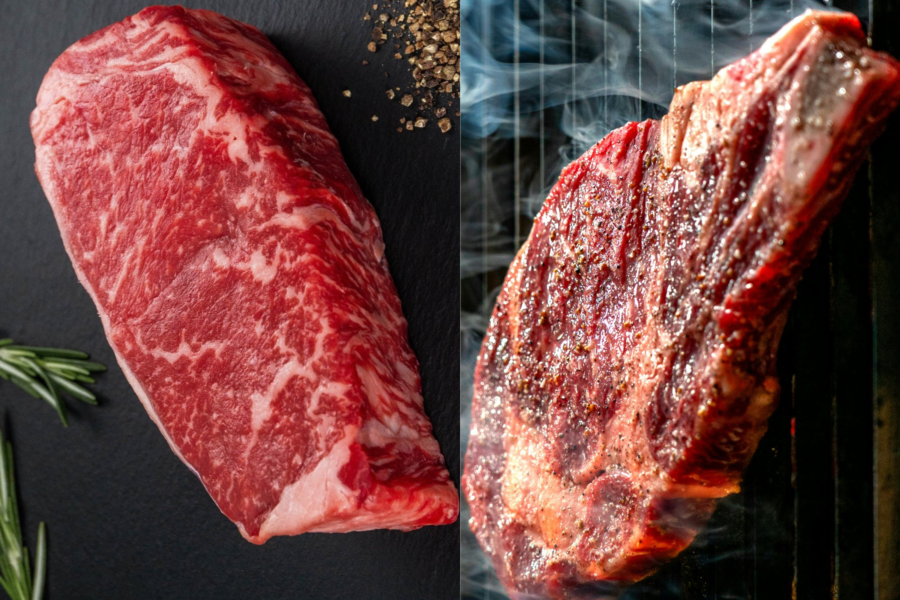
Ribeye is fatty, tender, and rich. Strip steak is leaner, firmer, and has a more intense beefy flavor. If you want the most indulgent steak on the plate, buy a ribeye. If you want a classic, satisfying steak with a proper chew, buy a strip. Both are excellent — the right choice depends on what you are in the mood for.
Strip Steak vs Ribeye: At a Glance
| Feature | Ribeye | Strip Steak |
|---|---|---|
| Also Known As | Delmonico, Scotch Filet | New York Strip, Kansas City Strip |
| Fat Content | High | Medium |
| Tenderness | Very tender | Tender, with a slight chew |
| Flavor | Rich, buttery, juicy | Intense, beefy, mineral |
| Best For | A decadent, special-occasion steak | A classic all-around steakhouse experience |
| Cost | Generally more expensive | Generally slightly less expensive |
The Spinalis Dorsi: The Best Bite on the Cow
The single most prized piece of meat on the entire animal is a muscle called the spinalis dorsi — more commonly known as the ribeye cap. It is the crescent-shaped muscle that wraps around the top of the ribeye, and it has more intramuscular fat than any other cut. When you eat a ribeye, the cap is the best bite on the plate, every time.
Some high-end butchers sell the spinalis dorsi on its own as a ribeye cap steak. It is expensive and hard to find, but it is the pinnacle of the steak experience. A strip steak has no equivalent. This one muscle is a significant reason why many cooks consider the ribeye to be the superior cut.
Where the Cuts Come From
Ribeye and strip steak are neighbors on the animal, which explains why they are often compared — but they come from different sections with different characteristics.
Ribeye comes from the upper rib section (ribs 6–12). This muscle does very little work, which keeps it tender and allows significant marbling to develop.
Strip steak comes from the short loin, just behind the rib section. This muscle does slightly more work, giving it a firmer texture and a more concentrated beefy flavor.
Fat Content: The Defining Difference
Ribeye is defined by its marbling. The intramuscular fat melts as the steak cooks, basting the meat from the inside and creating a rich, buttery, juicy result. This is the steak for people who love the flavor of rendered beef fat.
Strip steak has less marbling but still has enough fat to be flavorful and tender. It also has a thick fat cap along one edge, which you can trim or leave on. The lower fat content means the beef flavor is more concentrated and less rich than a ribeye.
Texture and Tenderness
A ribeye is one of the most tender cuts available. The high fat content gives it a soft, almost buttery texture.
A strip steak has a firmer, tighter grain. It has a pleasant, beefy chew that many people prefer over the softer texture of a ribeye. It is not tough — it just has more structure.
A Great Strip Beats a Mediocre Ribeye
The ribeye has the better reputation, but the quality of the individual steak matters more than the cut. A well-marbled, prime-grade strip steak from a good butcher will be a better meal than a low-grade, poorly marbled ribeye from a grocery store.
The strip’s firmer texture also means it develops a better crust when seared in a hot pan. Do not overlook it because of the ribeye’s reputation.
Pro Tip: Look for bright, cherry-red meat and creamy white fat. Avoid dull, brownish meat or yellow, waxy fat. Prioritize marbling regardless of the cut.
How to Cook Each Cut
Both steaks do best over high heat — grilling or a cast-iron pan sear.
Ribeye: The high fat content means flare-ups on the grill. Be ready to move it to a cooler zone if the flames get too high. In a cast-iron pan, the rendered fat pools and can be used to baste the steak. A ribeye is forgiving — the fat keeps it moist even if you push slightly past your target temperature.
Strip steak: Less prone to flare-ups and more straightforward to cook. Because it is leaner, it is less forgiving of overcooking. A strip that goes past medium will become noticeably dry. Be precise with your thermometer. Medium-rare (130–135°F) is the ideal temperature.
What to Look for at the Butcher Counter
Color: Bright, cherry-red meat. Dull or brownish color means it has been sitting too long.
Marbling: Thin white threads of fat running through the muscle. For a ribeye, look for significant marbling throughout, including the cap. For a strip, look for moderate marbling through the leaner eye of the steak.
Fat color: Creamy white. Yellow or waxy fat can indicate an older animal or poor feed quality.
Thickness: At least 1.5 inches for a proper sear. Thinner steaks cook too fast to develop a crust without overcooking the interior.
Grade: USDA Prime has the most marbling and is what high-end steakhouses use. USDA Choice is widely available and still excellent.
Frequently Asked Questions
Is a New York strip the same as a strip steak? Yes. It is also called a Kansas City strip, striploin, or top loin steak.
Is a Delmonico steak a ribeye or a strip? Historically the term covered several cuts, but today it most often refers to a boneless ribeye.
Which is better for a steak sandwich? Strip steak. The firmer texture slices more cleanly and holds up better in a sandwich.
The Big Naked Bacon Takeaway
There is no single best steak — only the best steak for you on a given day. If you want the richest, most decadent experience, buy a thick-cut bone-in ribeye and pay attention to the cap. If you want a classic, beefy, satisfying steak without the richness, buy a well-marbled New York strip. Or buy one of each and decide for yourself.
Leave a Reply