
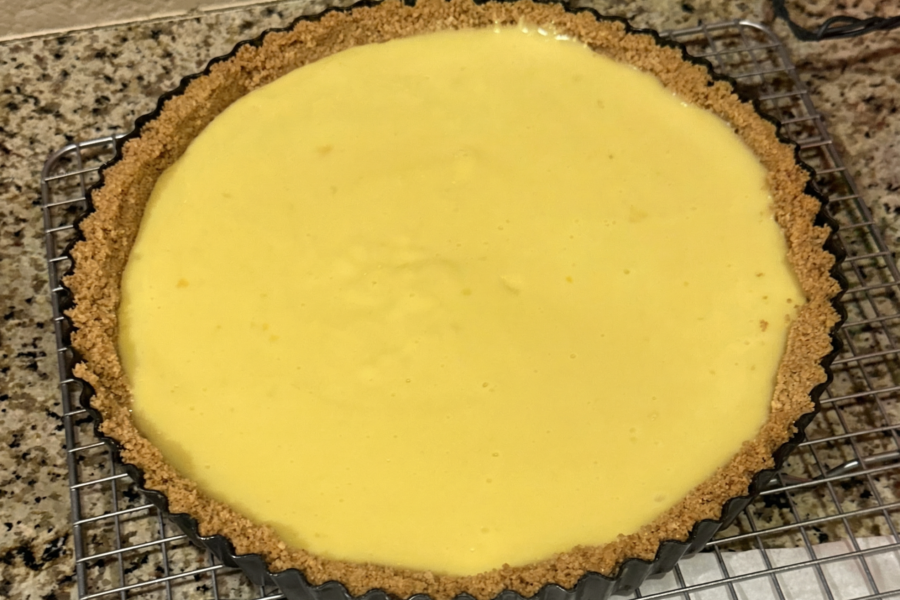
How long does key lime pie last in the fridge? The official answer is 3 to 4 days, but the real answer is that every hour it sits, something is lost. Key lime pie is a simple, perfect dessert. It’s also a food safety minefield if you don’t treat it with respect. The combination of egg yolks and sweetened condensed milk that creates the magic custard is also a welcoming environment for bacteria. This is a food safety article first, and a dessert article second. We’re going to cover the official guidance, the science behind why it spoils, and how to tell when it’s time to throw it out.
Key Lime Pie Storage Times: A Quick Reference
This is a food safety query, so let’s get straight to the numbers. These are the USDA-recommended guidelines.
| Storage Method | Safe Time | Best Quality |
| Refrigerator | 3–4 days | 1–2 days |
| Freezer | 1–2 months | Within 1 month |
| Room Temperature | 2 hours (max) | N/A |
Why Key Lime Pie Spoils: The Custard Science
An apple pie can sit on the counter for a day or two. A key lime pie cannot. The reason is the filling.
Key lime pie filling is a custard made primarily of egg yolks and sweetened condensed milk. This combination is rich in protein and moisture, which is an ideal breeding ground for bacteria like Salmonella and Listeria. Unlike a fruit pie, which is acidic and has a lower water activity, a custard pie is a perishable food, much like a quiche or a cheesecake. The two-hour rule for room temperature isn’t a suggestion; it’s a hard limit.
Over time, even in the fridge, two things happen:
1.Bacterial Growth: While cold temperatures slow down bacterial growth, they don’t stop it entirely. After 3-4 days, the bacterial load can reach a level that is unsafe to eat.
2.Oxidation and Weeping: The fats in the dairy and egg yolks begin to oxidize, which can create a sour or “off” flavor. The custard emulsion also begins to break down, causing water to separate and pool on the surface or at the bottom of the crust — a process known as weeping.
The Details That Actually Matter
Store-Bought vs. Homemade: The Preservative Factor
Not all key lime pies are created equal. A pie you buy from the grocery store bakery will often last longer than one you make at home — sometimes up to a week. This is not because it’s made better; it’s because it contains preservatives. Typically, you’ll see potassium sorbate and sodium benzoate on the ingredient list. These chemicals inhibit mold and bacterial growth, extending the shelf life far beyond what a homemade pie can safely achieve.
Your homemade pie doesn’t have these, which is a good thing. It just means you have to be more vigilant about the 3-4 day rule.
What Makes a Real Key Lime Pie? (And Why It’s Not Green)
An authentic Key lime pie, the kind that originated in the Florida Keys, has two defining characteristics that are almost universally ignored.
First, it is yellow, not green. The filling is made from egg yolks, sweetened condensed milk, and Key lime juice. The resulting custard is a pale, creamy yellow. If your pie is green, it means one of two things: the baker used standard green Persian limes instead of Key limes, or they added green food coloring to make it look more “tropical.” Neither is authentic.
Second, the flavor comes from real Key limes, which are smaller, rounder, more acidic, and have a more intense floral aroma than the larger, oval Persian limes you see in every grocery store. The difference in flavor is not subtle. However, it’s also a historical note: the commercial Key lime groves in the Florida Keys were largely wiped out by hurricanes, most recently Hurricane Irma in 2017. Most of the “Key lime juice” sold today, even the good stuff, comes from Mexico or Central America.
If you’ve gone to the trouble of sourcing real Key limes or high-quality bottled Key lime juice (like Kermit’s from Key West), you’ve made something worth preserving correctly. Don’t let it go to waste by leaving it on the counter.
The Soggy Crust Problem
The biggest threat to the quality of your pie is a soggy crust. This is caused by condensation. To prevent it:
•Cool the pie completely on a wire rack before it ever sees the inside of a fridge. This takes 2-3 hours.
•Cover it loosely. A tight plastic wrap seal traps moisture. Tent the plastic wrap over the pie or use an inverted bowl.
Pro Tip: The best defense against a soggy crust is to pre-bake your graham cracker crust for 10 minutes at 350°F before adding the filling. This creates a toasted, water-resistant barrier.
How to Freeze Key Lime Pie (and What to Expect)
You can freeze key lime pie for up to two months, but there are trade-offs.
How to Freeze:
1.Chill Thoroughly: Start with a pie that has been fully chilled in the refrigerator for at least 4 hours.
2.Freeze Solid: Place the uncovered pie in the freezer for 2-3 hours until it’s rock solid.
3.Wrap for Storage: Once solid, wrap it in two layers of plastic wrap, followed by a layer of aluminum foil. This prevents freezer burn.
How to Thaw:
To serve, remove all wrapping and thaw the pie in the refrigerator overnight (8-12 hours). Do not thaw it on the counter. The rapid temperature change will cause excessive condensation, ruining the crust and making the filling watery.
The Texture Change:
Freezing changes the structure of the custard. Upon thawing, the filling will be slightly denser and less silky than a fresh pie. It’s still delicious, but the texture is noticeably different. Furthermore, if your pie has a whipped cream topping, the cream may separate and become watery after thawing. It’s always best to freeze the pie plain and add fresh whipped cream before serving.
Visual Spoilage Checklist: When to Throw It Out
Your senses are the final authority. If you see or smell any of these signs, do not eat the pie.
| Sign | Description |
| Watery Layer | A clear or yellowish liquid pooling on the surface or in the bottom of the crust. |
| Sour Smell | A distinct, sour, or dairy-like off-odor. |
| Mold Spots | Any green, blue, or black fuzzy spots on the surface of the filling or topping. |
| Curdled Filling | The texture of the filling looks broken, grainy, or curdled. |
| Discoloration | The filling has turned a darker yellow or brownish color. |
Frequently Asked Questions
Q: How long can key lime pie sit out at a party?
A: Two hours is the maximum. That includes the time it sits on the dessert table. After two hours, it needs to go back in the fridge.
Q: My pie has cracks. Is it still safe to eat?
A: Yes. Cracks are a quality issue, not a safety issue. They are usually caused by over-baking or cooling the pie too quickly.
Q: Can I use regular limes instead of Key limes?
A: You can, but it will be a regular lime pie, not a Key lime pie. The flavor will be less intense and lack the characteristic floral notes of real Key limes.
The Big Naked Bacon Takeaway
Treat a homemade key lime pie like you would a gallon of milk. It’s a fresh dairy product that belongs in the fridge and has a limited shelf life. Respect the two-hour rule for room temperature, the four-day rule for the fridge, and when in doubt, throw it out. The risk is not worth the reward.
Leave a Reply