
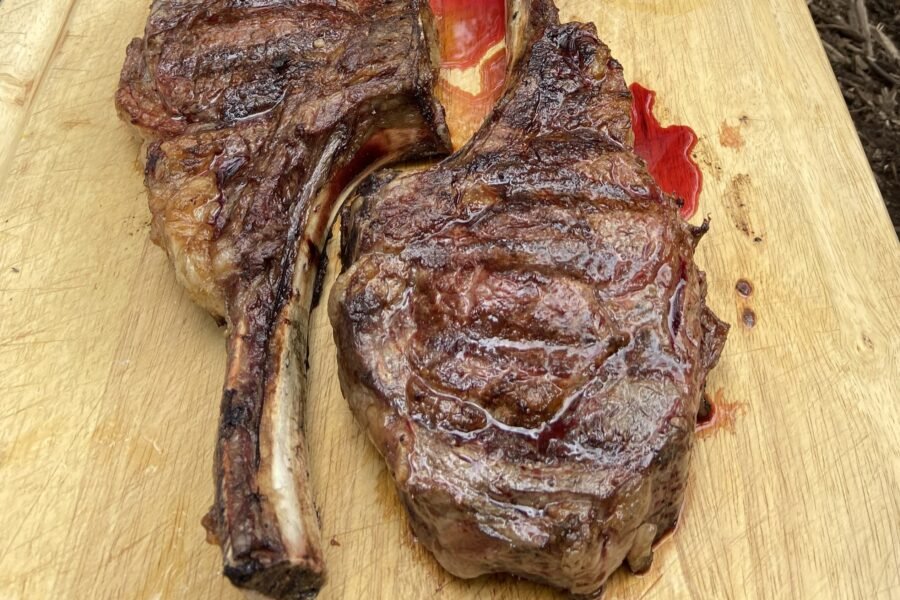
The short answer: The best way to cook a 2-inch thick steak is the reverse sear method. Cook the steak in a low oven (275°F) until it reaches an internal temperature of 115°F for medium-rare. Then sear it in a screaming-hot cast-iron skillet for 60–90 seconds per side to build the crust. This guarantees a perfectly cooked interior every time.
2-Inch Steak Cooking Guide: At a Glance
| Method | Best For | Difficulty | Result |
|---|---|---|---|
| Reverse Sear | Any thick steak | Easy | Perfect edge-to-edge doneness |
| Traditional Sear | Steaks under 1.5 inches | Medium | Can create a gray band of overcooked meat |
| Sous Vide | Any thick steak | Easy (requires equipment) | Perfect edge-to-edge doneness |
| Grilling (2-zone) | Any thick steak | Medium | Excellent flavor, less precise |
The Physics of the Reverse Sear
Every steak recipe tells you to reverse sear a thick steak. Almost none of them explain why it works so much better than a traditional sear.
The problem with a traditional sear — searing first, then finishing in the oven — is the temperature gradient. When you put a cold steak in a 500°F pan, the outside of the steak immediately begins to cook much faster than the inside. By the time the center reaches your target temperature (say, 130°F for medium-rare), the outer layers have blown past it and are well into the 160–180°F range. This creates a thick, gray, overcooked band of meat just below the crust.
The reverse sear flips this process on its head. By starting the steak in a low oven (250–275°F), you are gently bringing the entire steak up to temperature at the same time. The temperature gradient is eliminated. You pull the steak from the oven when it is just 10–15 degrees below your final target. The sear at the end is no longer about cooking the steak — it is only about creating the crust. The result is a steak that is perfectly pink from edge to edge, with a thin, beautiful crust.
The Steakhouse Secret: Dry-Brining
This is the single biggest thing you can do to improve your steak game. It is what high-end steakhouses do, and it is incredibly simple.
What it is: Season the steak with kosher salt and leave it uncovered on a rack in the refrigerator for 24 to 48 hours before cooking.
Why it works:
Deep seasoning. The salt draws moisture out of the steak through osmosis. That moisture then dissolves the salt and is reabsorbed back into the meat, seasoning it from the inside out. This is far more effective than salting the surface right before cooking.
A drier surface for a better crust. The cold, dry air of the refrigerator wicks away surface moisture. A dry surface is the key to a great crust. When you put a dry steak in a hot pan, all the heat energy goes into creating the Maillard reaction. When you put a wet steak in a hot pan, the heat energy is wasted boiling off the surface moisture first.
How to Cook a 2-Inch Thick Steak: Step-by-Step
This method works for any thick-cut steak: ribeye, New York strip, porterhouse, or filet mignon.
Step 1 — Dry-Brine (Optional, but Recommended) Season your steak generously on all sides with kosher salt. Place it on a wire rack set inside a baking sheet and refrigerate, uncovered, for at least 24 hours and up to 48 hours.
Step 2 — The Slow Cook Preheat your oven to 275°F (135°C). Place the steak (still on the rack and baking sheet) in the oven. Cook until the internal temperature reaches 115°F for medium-rare, 125°F for medium, or 135°F for medium-well. This will take approximately 30–45 minutes. Use a reliable instant-read thermometer. Do not guess.
Step 3 — The Sear Remove the steak from the oven. Heat a cast-iron skillet over high heat until it is smoking hot. Add a high-smoke-point oil such as grapeseed or canola. Place the steak in the pan and sear for 60–90 seconds per side until a deep brown crust forms. Sear the edges for 15–20 seconds each.
Pro Tip: For an extra layer of flavor, add a tablespoon of butter, a few smashed garlic cloves, and a sprig of thyme or rosemary to the pan during the last 30 seconds of searing. Tilt the pan and baste the steak with the foaming butter.
Step 4 — The Rest Transfer the steak to a cutting board and let it rest for 5–10 minutes before slicing. This allows the muscle fibers to relax and the juices to redistribute.
Choosing the Right Steak for This Method
Ribeye (bone-in or boneless) is the ideal candidate. The high fat content keeps the steak juicy throughout the long oven phase, and the fat renders beautifully during the sear. A bone-in ribeye — also called a cowboy steak or tomahawk — is the ultimate expression of this method.
New York Strip is an excellent choice. The firmer texture holds up well to the reverse sear, and the leaner profile means the beefy flavor is very concentrated.
Porterhouse or T-Bone contains both the strip and the tenderloin, separated by a bone. These work well with the reverse sear, but the tenderloin will cook slightly faster than the strip side. Pull the steak when the strip side reaches your target temperature.
Filet Mignon is the most delicate and lean of the premium cuts. It works with the reverse sear, but because it has very little fat, it can dry out if overcooked. Be precise with your thermometer.
Steak Doneness Temperature Guide
| Doneness | Pull from Oven at | Final Temperature | Description |
|---|---|---|---|
| Rare | 105°F | 120–125°F | Cool, red center |
| Medium-Rare | 115°F | 130–135°F | Warm, red-pink center |
| Medium | 125°F | 140–145°F | Warm, pink center |
| Medium-Well | 135°F | 150–155°F | Slightly pink center |
| Well Done | 145°F | 160°F+ | No pink |
Frequently Asked Questions
Can I grill a 2-inch steak? Yes. The grilling equivalent of the reverse sear is two-zone cooking. Set up your grill with a hot zone and a cool zone. Cook the steak on the cool zone until it reaches the target temperature, then move it to the hot zone to sear.
What is the best internal temperature for a 2-inch steak? Most cooks agree that 130–135°F (medium-rare) is the sweet spot for a thick, well-marbled steak like a ribeye or strip.
Do I need a cast-iron pan? You do not need one, but it is highly recommended. Cast iron retains heat better than any other type of pan, which is essential for creating a great crust quickly without overcooking the interior.
The Big Naked Bacon Takeaway
A thick steak is an event. It deserves to be cooked with intention. The reverse sear method is not a shortcut — it is a more intelligent way to cook. It eliminates the guesswork and guarantees a result that is better than what you will get in most restaurants. Master this one technique, and you will never be intimidated by a thick steak again.
Leave a Reply